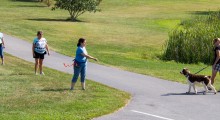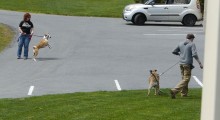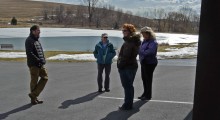


This website is devoted to providing information to help reactive dogs using simple, safe, non-force, positive reinforcement methods. You’ll find video and photos of actual ongoing reactive dog classes in our blog, and lots of training hints in our “About” pages. This is also the site for Tanacacia Press, Publisher of Books and DVDs for owners and trainers of shy, fearful, and reactive dogs.
Help for owners and trainers of reactive dogs
The Bing Blogs book
Dog anxiety problems? That was Bing’s issue and it didn’t make life easy for him or us. He couldn’t relax in the car. He shredded almost anything in his crate. He’d snap at any hand that reached out to pet him.
Read more...
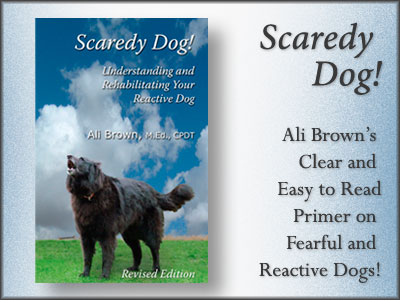
Scaredy Dog! book
When dogs growl at other dogs, lunge at people and bark at everything it’s often mislabeled as “aggression.” But behavior that looks like aggression is often fear-based and should be treated as such. The term for this is reactivity.
Read more...
Reactive Dog Exercises
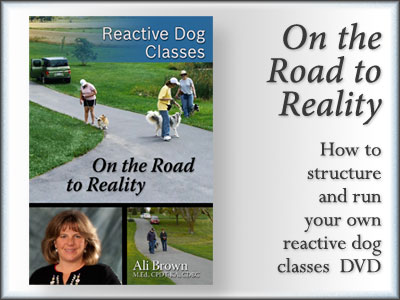
Whether you are working on your own, teaching a reactive class or a student in one, this DVD will show how to use positive reinforcement, shaping, and classical conditioning to help your dog learn to tolerate the world around him.
Read more...
Focus Not Fear book
This book illustrates the work that Ali Brown does in her reactive dog group classes at Great Companions. It outlines specific training techniques and the reasoning behind them.
Read more...
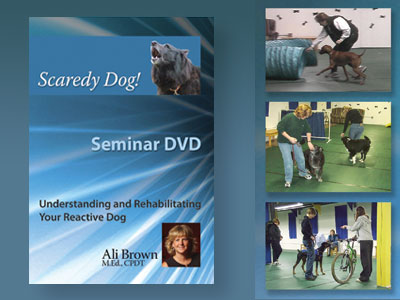
Scaredy Dog! Seminar DVD
A two hour program, including special instructions, video clips and images showing you how to help your reactive dog. Bonus DVD is shows scenes from actual reactive dog classes.
Read more...
Reactive Dog Webinar
Evaluation of Reactive Dogs
This webinar aims to assist trainers and experienced dog owners in understanding the origins of reactivity in dogs. You can watch this program live or download and view on your own schedule.
Read more...Latest Images
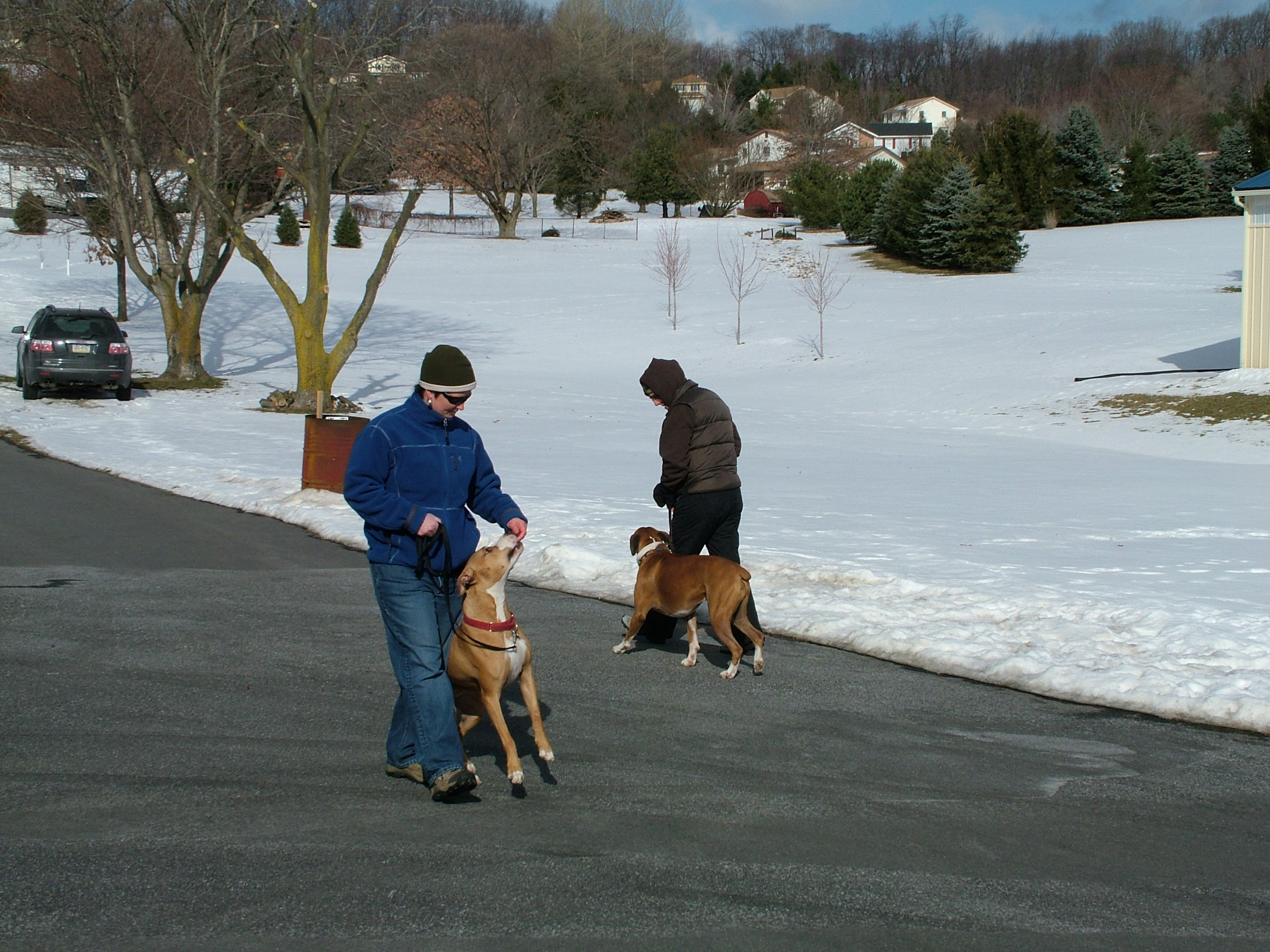
Reactive Class
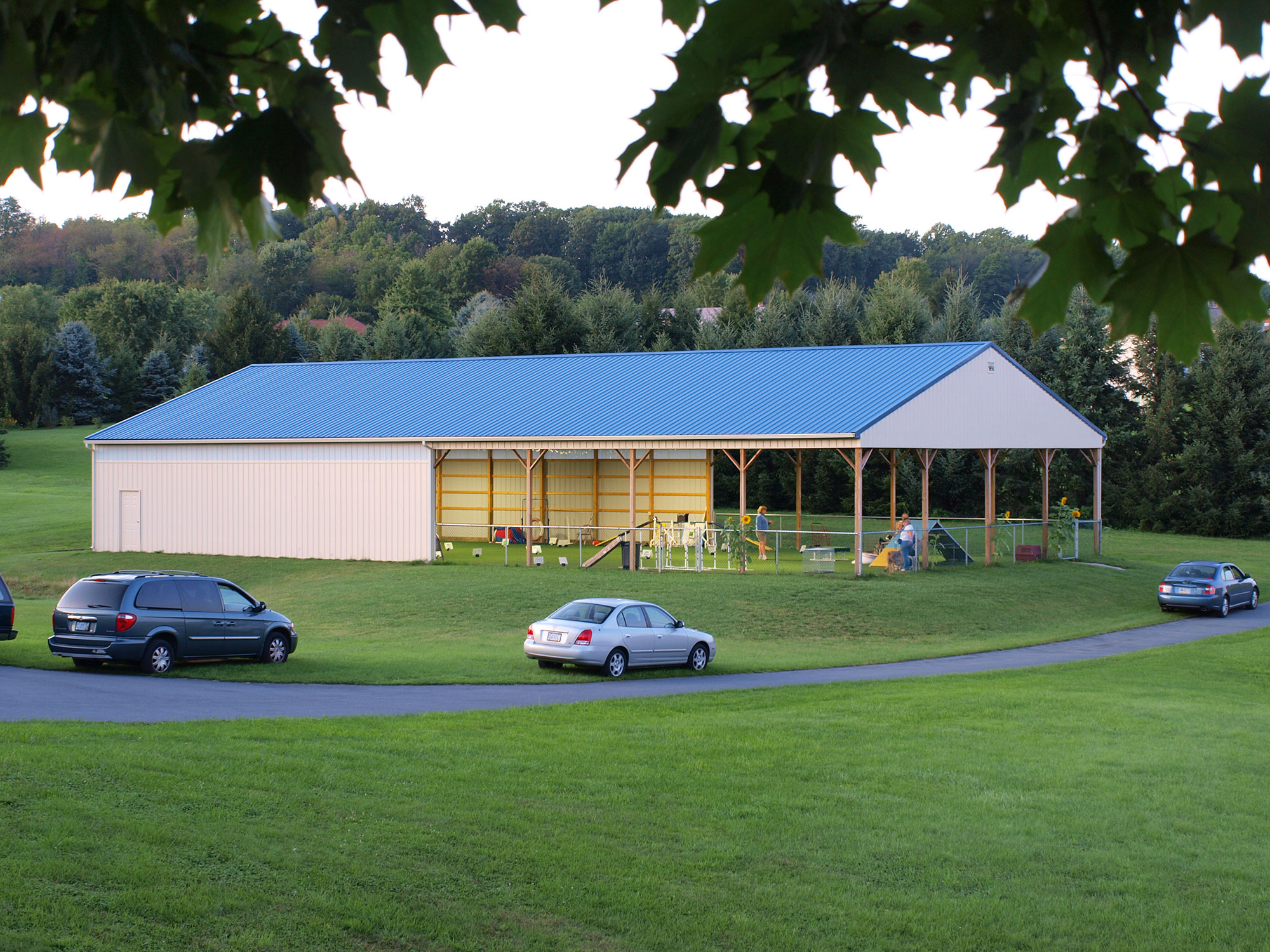
Reactive Agility